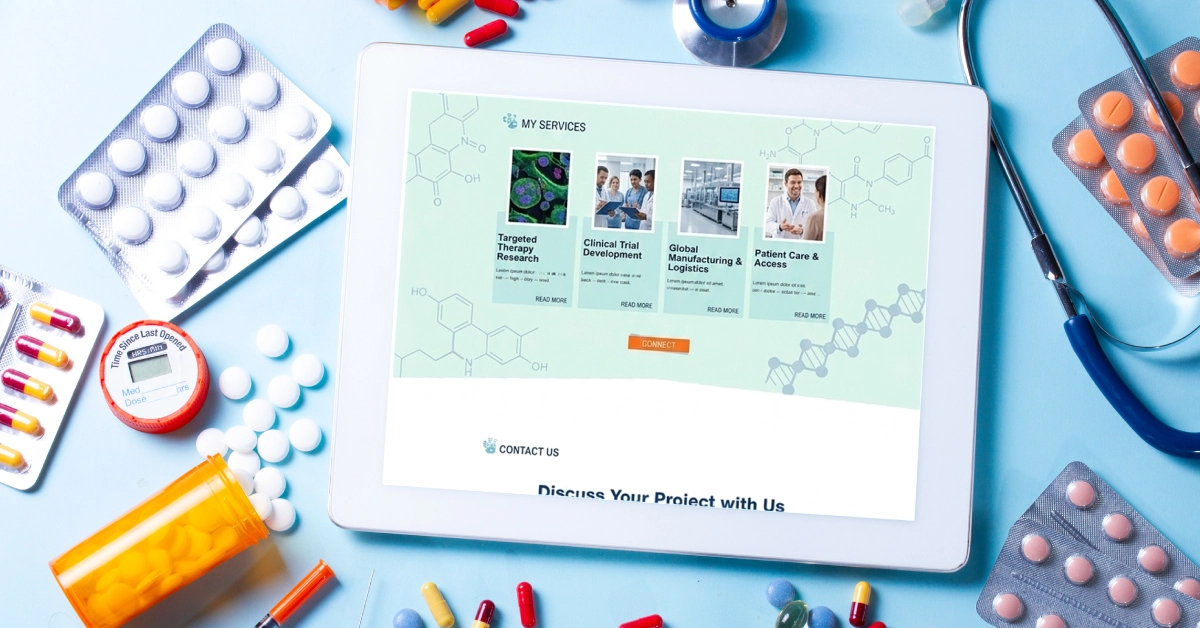
In the pharmaceutical and bio-science sector, your website is your shop window.
Before a conversation happens, your audience is assessing credibility, accuracy, and professionalism. Whether they are clinicians, procurement teams, partners, or patients, expectations are high. A poorly structured or unclear website can quickly undermine even the strongest organisation.
Good design, in this sector, is about trust.
When Standard Solutions Aren’t Enough
In one project we were asked to rebuild an e-commerce website for a healthcare manufacturer with a strong reputation in respiratory products.
The requirement was that the site needed to:
- Operate as a standalone platform alongside a corporate website
- Integrate seamlessly with a chosen payment gateway
- Support a wide range of healthcare products
- Include bespoke functionality around VAT exemption for eligible customers
This is typical of pharmaceutical and healthcare projects. Off-the-shelf solutions rarely meet all requirements. The detail matters, and the functionality needs to be precise.
Designing Around Real-World Use
The key to delivering the project successfully was understanding how the website would actually be used.
Customers needed to:
- Browse and understand a technical product range
- Identify the correct products for their needs
- Complete purchases confidently and accurately
- Declare eligibility for VAT exemption where applicable
That last point was critical. The checkout process had to allow eligible users to confirm their status and ensure VAT was not applied incorrectly. This required a tailored configuration within the e-commerce system.
Clarity Is What Builds Confidence
Pharmaceutical websites often need to present complex information - product specifications, clinical relevance, regulatory considerations - without overwhelming the user.
The design approach focused on:
- Structuring content so it is easy to navigate
- Presenting technical information clearly and logically
- Reinforcing credibility through consistent, professional design
- Supporting both product discovery and purchase
When users can quickly understand what they are looking at, confidence increases. That is what leads to engagement and action.
The Result: A Website That Works as Intended
The finished platform delivered exactly what it needed to:
- A fully functional e-commerce website tailored to the organisation’s requirements
- A reliable checkout process with correct VAT handling
- Clear presentation of a specialised healthcare product range
- An online experience that supports both patients and professional users
What Pharmaceutical Companies Should Expect from Their Website
There are some clear principles that apply across the sector:
- Clarity over complexity: Your expertise may be technical, but your website should make it easy to understand.
- Functionality must reflect real needs: If your processes involve specific requirements - regulatory, financial, or operational - your website needs to handle them properly.
- Credibility is critical: Design, structure, and content all contribute to how your organisation is perceived.
- User experience drives engagement: If users struggle to find information or complete actions, they are unlikely to proceed.
A More Considered Approach to Website Design
Website design for pharmaceutical companies requires:
- A clear understanding of your audience and their expectations
- Structured content that supports decision-making
- Reliable functionality that reflects how your business operates
- A design that reinforces trust at every stage
When these elements are in place, your website becomes a valuable business tool.
Need a Website That Reflects Your Expertise?
If your current website doesn’t fully represent your organisation, or if it lacks the functionality your users need, there is a better way to approach it.
BBI Brandboost designs and builds websites for pharmaceutical and bio-science companies that prioritise clarity, credibility, and performance.
If you would like to review your current website and identify where it can be improved, get in touch.