A website can look great and still fail to convert. This is because users may struggle to interact with your site. This is where UX (user experience) and UI (user interface) design play a critical role in improving conversions.
When done well, UX and UI remove friction, guide users naturally, and make taking action feel easy.
UX and UI – what’s the difference?
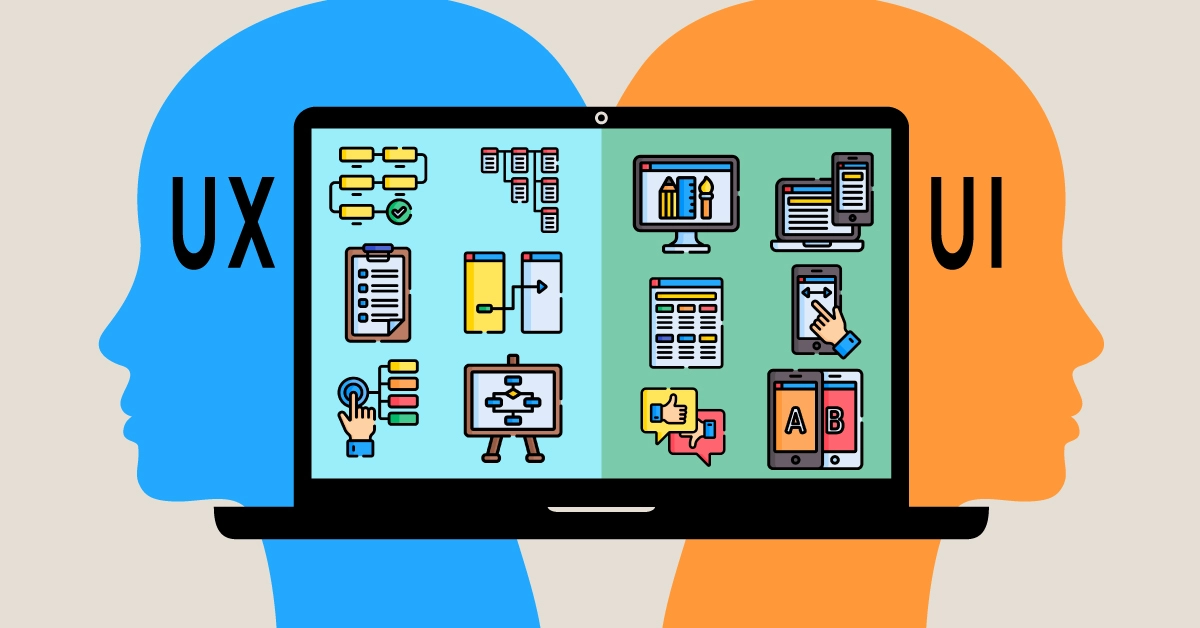
UX focuses on how a website works from the user’s point of view. It covers structure, navigation, clarity, and how easily someone can complete a task. UI is about how that experience is presented visually – layout, typography, colour, spacing, and interactive elements.
They work together. Strong UI supports good UX, and good UX gives UI a clear purpose.
Reducing friction at every step
Every extra click, confusing label, or slow loading page increases the chance that a user will drop off.
Clear navigation, logical page structures, and intuitive journeys help users find what they are looking for quickly. When people do not have to think too hard, they are far more likely to convert.
Clear hierarchy drives action
UI design helps users understand what matters most on a page. Visual hierarchy created through layout, contrast, and spacing directs attention to key messages and calls to action.
If everything looks equally important, nothing stands out. Effective UI ensures that primary actions are obvious, supporting content is easy to scan, and users are not overwhelmed.
Trust is a conversion factor
Users make quick judgements about credibility. Outdated layouts, inconsistent styling, or poor mobile experiences can quietly undermine trust, even if the content is strong.
Consistent UI, professional typography, accessible colour contrast, and well designed forms all contribute to confidence. When a site feels considered and easy to use, users are more comfortable taking the next step.
UX decisions should be data led
Good UX should not be guesswork. Analytics, heat maps, user behaviour data, and testing all inform design decisions. Where do users drop off? Which pages convert best? Where do they hesitate?
Combining data with design expertise leads to measurable improvements, rather than just nicer looking pages.
Conversion is about experience, not pressure
Pop ups, aggressive CTAs, and forced urgency can work in the short term, but often damage long term trust. Thoughtful UX and UI make conversion feel like a natural next step rather than a hard sell.
When users feel understood and supported, they are far more likely to act.
Improve your website
If your website gets traffic but is not converting as it should, the issue is often UX and UI rather than marketing spend. BBI design and optimise websites with conversion in mind, focusing on balancing aesthetics, usability, and performance.
Speak to us to see how your site could work harder for your business.