Under the definitive title “SEO is Content Marketing,” Meg Clarke of Virginia based Clapping Dog Media calls for moving away from having a keyword-centred content strategy, and transitioning over to an audience-centred strategy.
Whilst the title itself is far-fetched, the move towards an audience centred strategy is something that is definitely of interest, even more so due to the rise in voice search.
While many people today are still learning the benefits of using voice search to get information, it’s becoming a valuable tool to simplify the search process and quickly get answers without interrupting other daily tasks.
Therefore voice search is the thing to concentrate on when creating content for your website, as you must answer your audience’s questions. If you don’t, then there is no chance of your content coming up when a voice search command is in process.
Maintaining the right balance
Content marketing involves the creation and sharing of online material (such as videos, blogs, and social media posts), whereas SEO is about getting your website and content found within search results, often through the use of technical enhancements that make the content more easily accessible to search engines.
The precise ratio of effort to put into each activity - the creation of content and then its subsequent optimisation - will depend on a range of factors, such as company goals, staff available and the type of content you produce. However, as a general rule, putting in the effort early to determine what questions your audience want answering will help you go along way into optimising content for SEO.
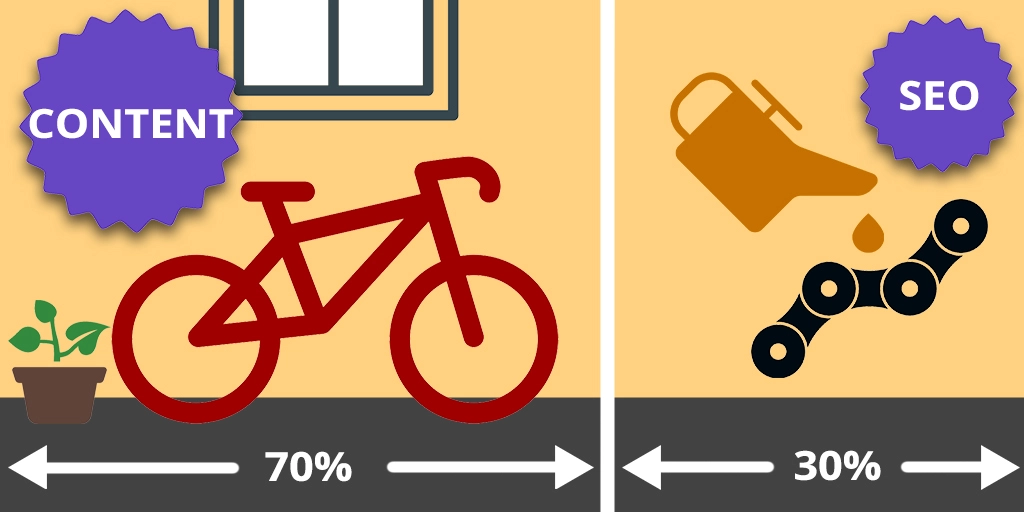
Therefore, we suggest the following split: 70% of effort should be spent researching your audience and creating the right content to answer their questions, with the remaining 30% used to optimise the content for search.
In conclusion, these two focal points of running a website are interrelated, but are not the same, and maintaining a healthy balance between the two is vital. Once you put the right amount of effort into each activity, SEO and content marketing form a truly potent mix.